Indian: One land. Many stories.
Posted by Remya Padmadas on January 26, 2017India has always thrived on stories. From folk tales to urban legends, stories truly bring the country together. What better way is there to celebrate Republic Day than by reading stories from across the country that celebrate its myriad arts and crafts, flora and fauna, people and food!
Handmade In India by Olivia Fraser
Olivia Fraser takes us on a handcrafted journey through India, starting from the North, going to the South, East, and finally West – touching upon every corner of the country. The beautiful illustrations to go along with the story only enrich it – depicting everything she describes.
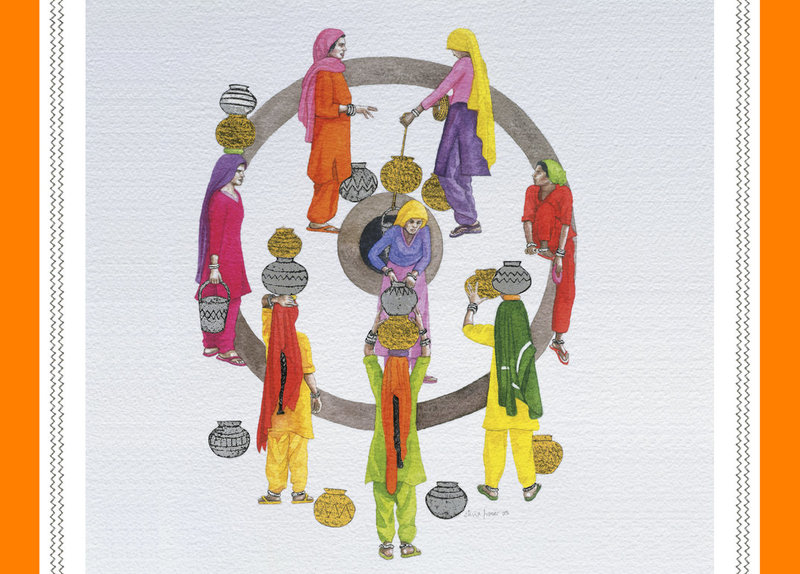
ಮರಗಳ ನಡುವೆ ಒಂದು ವಿಹಾರ (A Walk Among Trees) by Nimret Handa
The story follows the conversation between a king and his son, the prince, as they walk through the orchard. The king tells his son about all the different trees in India, all of which can be found in the royal orchard. Nimret Handa has written this beautifully with minimalistic illustrations, ensuring that the focus stays more on the writing and the information about each tree while still making it appeal to children.
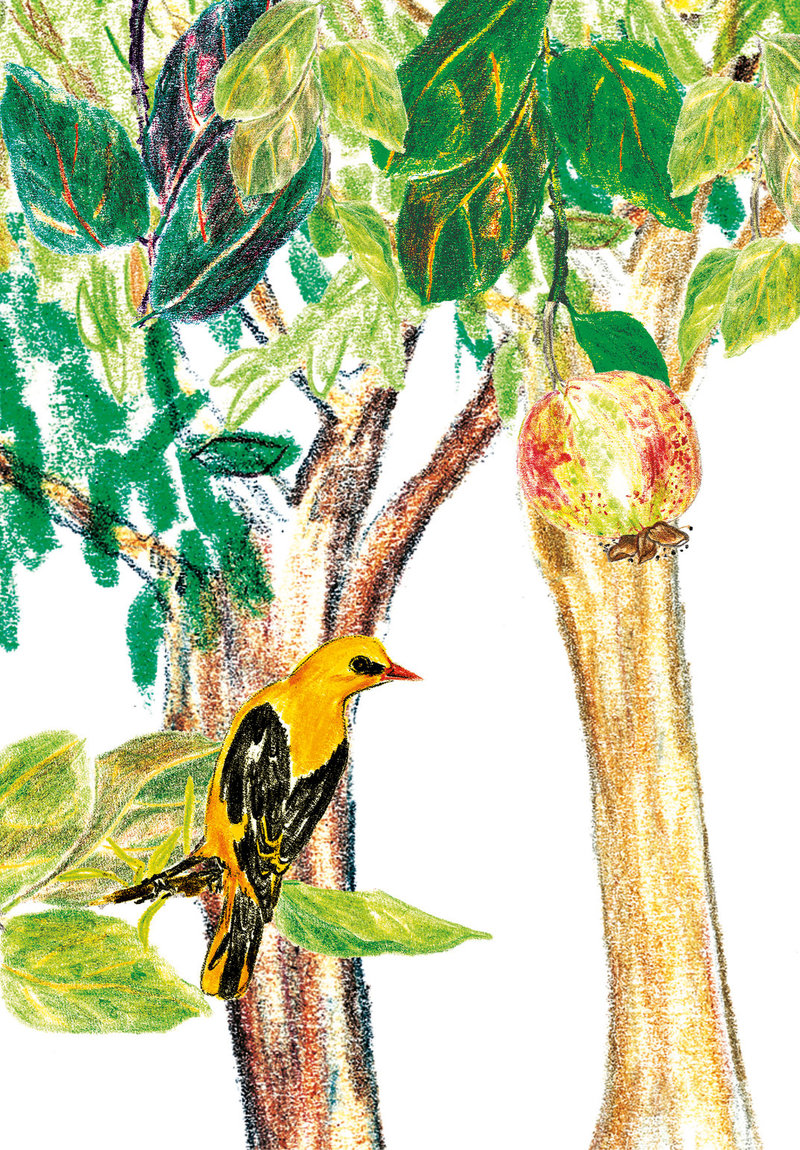
सबसे पहला घर (First House) by Nabanitha Deshmukh and Phidi Pulu
Set in Arunachal Pradesh, this folk tale tells the story of how the very first house was built. How the two friends: Kindru-Lalim and Kincha Lali-Dam got help from the forest to built the house. Along with facts about the tribe they belong to at the end, साबसे पेहला घर is brought to life with vibrant illustrations.
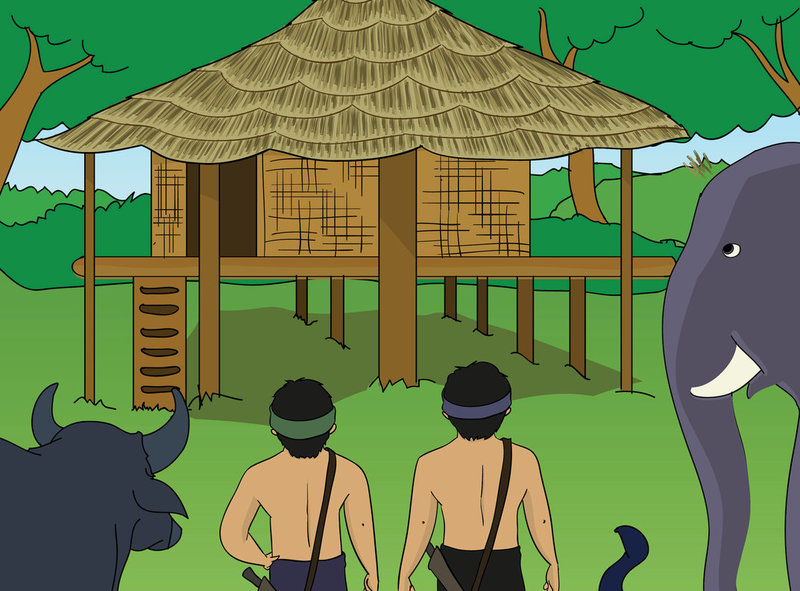
मुमताज़ ने काढ़े अपने सपने (Mumtaz Embroiders Her Dreams) by Jolly Rohatgi and Ram Soni
Mumtaz is a young girl who has come to Lucknow to further her knowledge of chikankari - the traditional embroidery style there. She meets a child called Munnu and Munnu teaches her how to dream - greatly influencing her embroidery. But Mumtaz also has a pair of cousins who are determined to ruin her work. This story, coupled with the unique illustration style, is definitely something children should read.
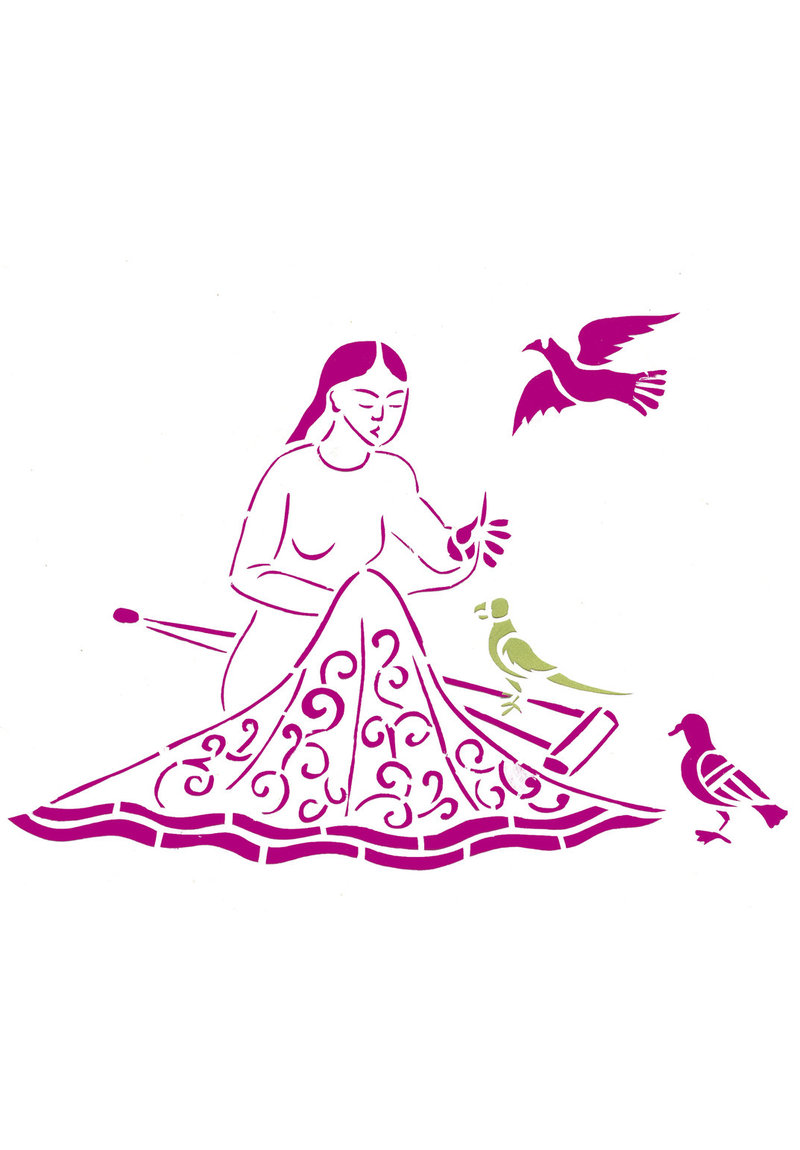
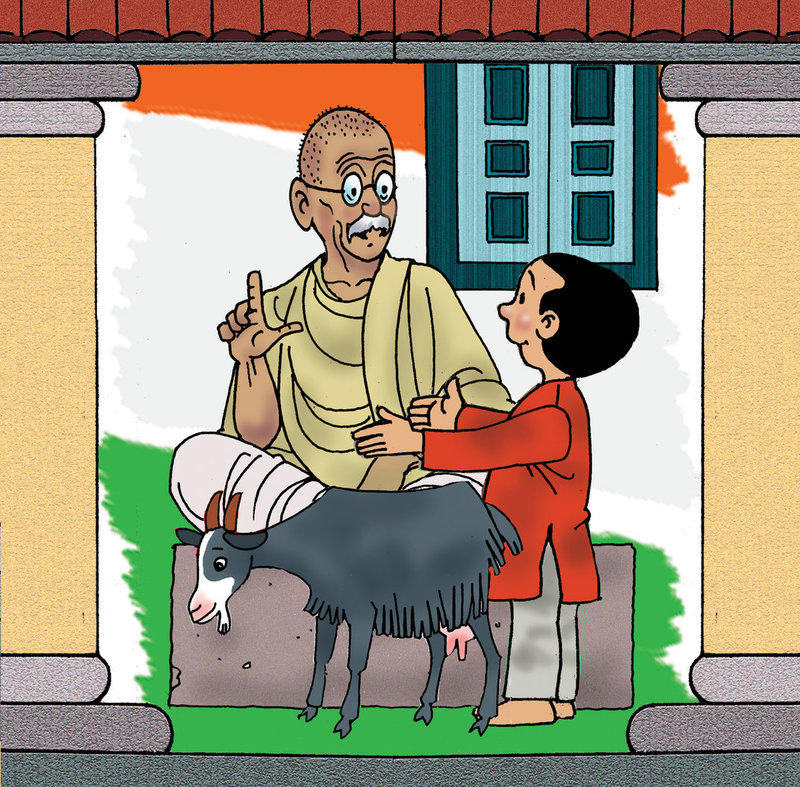
स्वातंत्र्याकडे आगेकूच (Marching to Freedom) by Subhadra Sen Gupta and Tapas Guha
Told from a child's point of view, this story is about the Dandi March that Mahatma Gandhi undertook. A young boy at the ashram finds out about the march and wants to join, only to meet Gandhi at the end of the book. The story itself is filled with beautiful, colourful illustrations that immediately catch the eye.
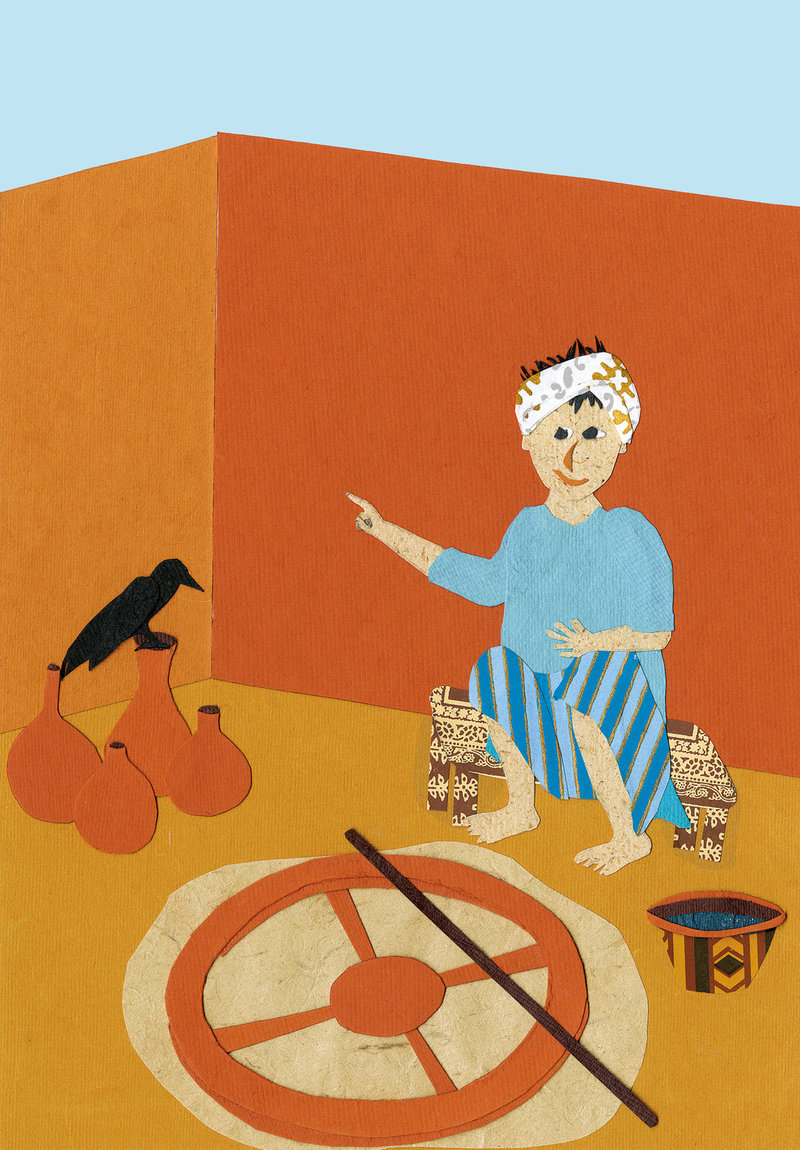
काका और मुन्नी (Kaka and Munni: A Folktale from Punjab) by Natasha Sharma
Kaka is a crow who wants to eat Munni, the sparrow's, eggs. Munni cleverly asks Kaka to do something first and so Kaka goes on a journey, needing to complete various tasks since nobody he meets wants him to eat Munni's eggs. A true children's and folk story, Kaka and Munni is a delightful read aloud story.
The illustrations almost entirely in different shades of blue, The Cloud Dragon tells the legend of how Meghalaya was named. It begins with Lord Indra making the cloud dragon and ends with a home in the clouds for the dragon, who brought down rainfall and make rain clouds for Meghalaya and the neighbouring states.
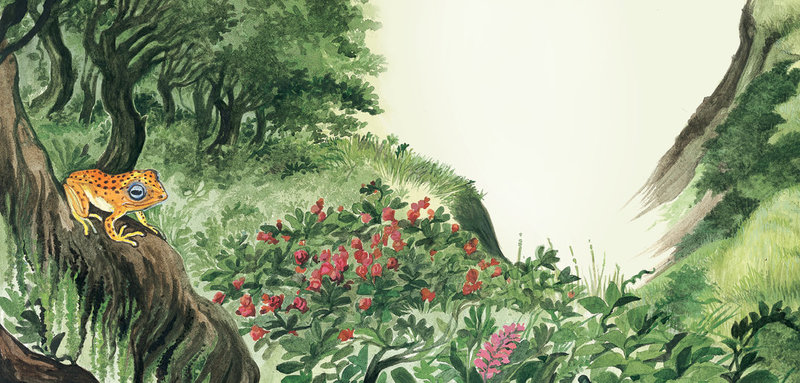
The Adventures of Philautus the Frog by Kartik Shanker and Maya Ramaswamy
Philautus the Frog wants to see the sea and so goes on an adventure through the Western Ghats in this story, meeting all the creatures beyond his tree.
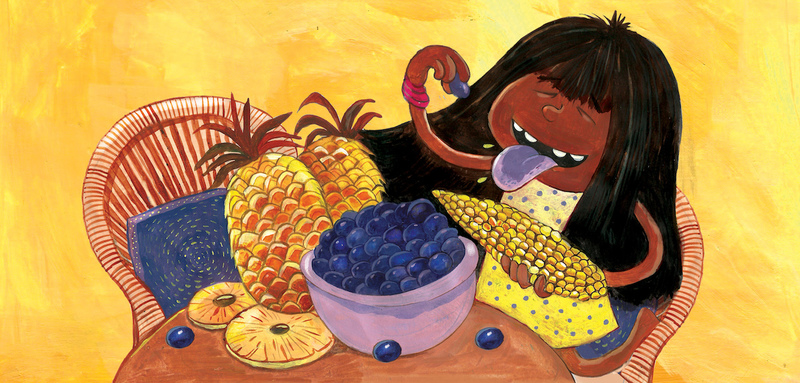
What’s Neema Eating Today by Bijal Vachharajani and Priya Kuriyan
What’s Neema Eating Today is a book for food lovers of all ages. Join Neema as she eats her way through the seasons, enjoying all the fresh fruit and vegetables this country has to offer our taste buds.
Be the first to comment.
StoryWeaver enters Chandrapur
Posted by Remya Padmadas on July 14, 2016StoryWeaver's Outreach Manager Payoshni Saraf shares what happened at a two day workshop in Chandrapur, Maharashtra.

In the warm month of May, a two-day workshop on StoryWeaver was jointly organized in Chandrapur, Maharshtra by UNICEF India, DIET- Chandrapur and Pratham Books with over 36 teacher from Government schools participating. The workshop sought to encourage the value of ‘reading for joy’ and introduced the teachers to StoryWeaver - an open source digital repository of multilingual stories. Through the workshop the teachers and resource people were taken through the various ways in which StoryWeaver could help address the language development requirements of the students and were guided to make them more confident about using technology to bring in more resources into their classrooms.
The session opened with a narration of ‘Bheema, the Sleepyhead’ and the participants were asked to guess how Bheema finally woke up. This set the context for the workshop with the participants agreeing that stories
a) are important in the classroom
b) make us think creatively and imaginatively, experience emotions and build curiosity
c) help children learn better.
As the session progressed into introducing StoryWeaver with a demo, participants shared their vision on how they would bring more stories into their classrooms. The second half of the day was reserved for a hands on session where the participants created content on StoryWeaver. This resulted in the creation of over 18 new stories by 16 first time authors, the addition of stories in two new tribal languages (Gondi and Banjari), 4 versions of a single story in less than 24 hours and curation of 25+reading lists that were useful for the participant group and the StoryWeaver community at large.
This teacher created and shared a story written in a dialect of Marathi spoken only in the Vidarbha region of Maharashtra.
Day two revolved around the various ways in which StoryWeaver can be used in the classroom and how non-fiction concepts can be delivered through stories. The teachers were acquainted with the 200 books on STEM concepts on StoryWeaver, a unique offering of fun and knowledge and a module on its use in the classroom. As part of the module, we read out Dum-Dum-a-Dum Biriyani to the group and asked the teachers to share their thoughts on the book. Along with noting that the book establishes the everyday use of multiplication and division in real life, many other interesting anecdotes were also shared.
One teacher pointed out how the story breaks gender stereotypes by showing Basha being the one interested in cooking rather than his sister, and how such mindset change can be brought about in young minds only through stories. Life skills like empathy, teamwork and responsibility emerged as other key take-aways from the story.
In later sessions participants came together to brainstorm on ideas to bring in more ‘reading’ and ‘books’ in their schools and classrooms. Some of these ideas included:
a) make ’15 minutes of daily reading’ compulsory
b) buy/raise funds for more books and establish and manage ‘leveled’ libraries and use StoryWeaver to supplement as an e-library
c) use stories for enhancing classroom resources
d) encourage creative thinking and writing
d) Sharing of resources, reading lists and best practices among the teacher peer group through a WhatsApp group.

Teachers brainstormed in groups to create and share a 'reading' action plan
A feedback survey was done towards the end of the workshop to know from the teachers if the workshop was beneficial for them, gauge their comfort in using technology to find and create resources, their vision for its use in the classrooms and their commitment on the listed next steps.
Many teachers echoed the sentiment of ‘how different reading levels of stories is very helpful in a classroom setting as children are at different levels and will be able to read a story as per their reading ability. The presence of so many stories at one single platform will be able to fulfill all their reading needs.’
A retired teacher who now dedicates his time in setting up libraries remarked:
“I set up libraries in various schools and I am always looking for more books on different subjects. StoryWeaver is a great medium for my quest. So many stories on so many subjects, all for free! This is like Alibaba’s Khazana that we have all got!”
The two-day StoryWeaver workshop generated a wealth of ideas and established the foundation of ‘importance of reading and stories in the classroom’. We thank all the participating teachers, UNICEF and DIET-Chandrapur for making this workshop a precious experience for all of us.
Be the first to comment.One Day, One Story...Many Languages!
Posted by Amna Singh on September 05, 2018Pratham Books' One Day, One Story is back with story reading sessions for children across India! On September 8, Pratham Books Champions all over India will use one book to conduct reading sessions for children in their communities. All sessions are conducted free of cost, and focus on children from under-served communities. You can read more about this event here.
This year, Season 7 of One Day, One Story will feature A Cloud of Trash, written by Karanjeet Kaur, and illustrated by Bhavana Vyas Vipparthi. It’s a story about a little girl called Cheekoo, who has a cloud of trash hanging over her head. This makes her very, very unhappy, and as we follow her story, we learn a little more about trash, and about keeping our surroundings clean.
Last year, 5700+ Champions took the story of Kottavi Raja and his Sleepy Kingdom to thousands of children – conducting 6300+ storytelling sessions in 26 languages, in 25 states and 3 union territories in India. As well as 13 other countries.
We need your help to help children discover the joy of stories, and fall in love with reading. The more languages a story is translated in, the more it will travel to be read and enjoyed by children.
A Cloud of Trash, a reading level 2 story, is already available in English, Hindi, Kannada, Tamil, Gujarati, Konkani, Marathi, Bengali, Odia, Sanskrit, Punjabi, Telugu, Maithili and also, in Surjapuri and International languages like Portuguese, Basa Sunda, French, Spanish, Bahasa Indonesia, Czech, Italian, Norwegian,and Chinese too. Join in as a Translation Volunteer to translate this story to a new language. Your contribution to add a language version of this story on StoryWeaver will go a long way in multiplying the number of PB Champs' reading sessions and in turn, help reach more and more kids. We have also created a level 1 version of this story for sessions with a younger audience. You can weave a translation of this version too if you like.
Wouldn’t that be lovely?
We need all the translations to be on the site before 30th August.
If you have any queries please write to us at [email protected]
Here's a quick and easy video tutorial on how to translate stories on StoryWeaver. Once you've seen it, you can head over to the site to start translating A Cloud of Trash.
P.s: If you're interested in joining us as a PB Champ this year, click here to enrol.
Be the first to comment.