Start to Finish: an illustrator shares his work.
Posted by Remya Padmadas on March 03, 2016
Vishnu M Nair is a visual artist based out of Delhi. He creates contemplative, surreal and humorous narratives in his artworks in many styles and mediums.
'How Far is Far' is a story about scale and comparison, starting small and ending really really large.
The scale of it all really excited me. Below is how I went about planning and illustrating for page 2 of the book i.e 10 m - the second step of the ladder.
Step 1/Layout
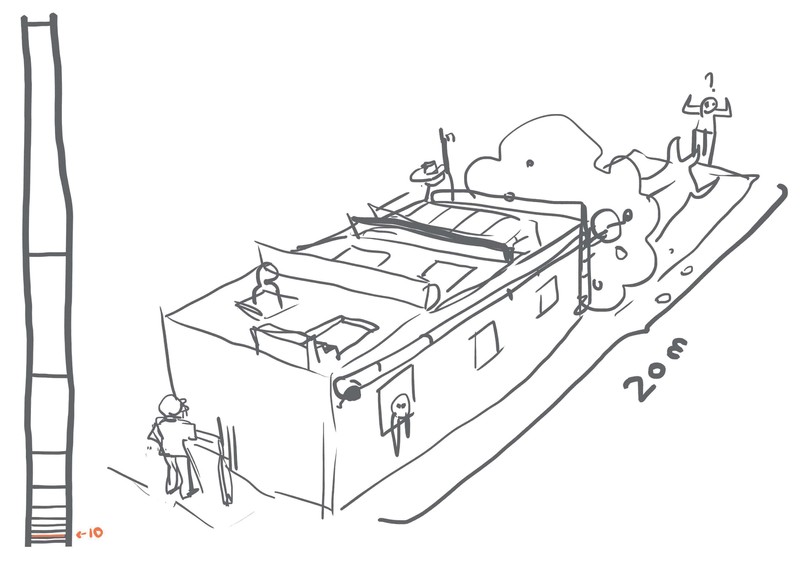
Since the imagery of the book was so rich and quirky I chose not to tweak it.
"A three storey building or a mango tree is roughly 10 metres high. A cricket pitch is about twice that length."
I drew the above description out. It would be so strange to see such a visual - so I drew some dumbfounded characters around it.
Step 2/Pencils
A few years ago I learned this neat trick for colouring on photoshop and I planned to use the same method(which you will see later).
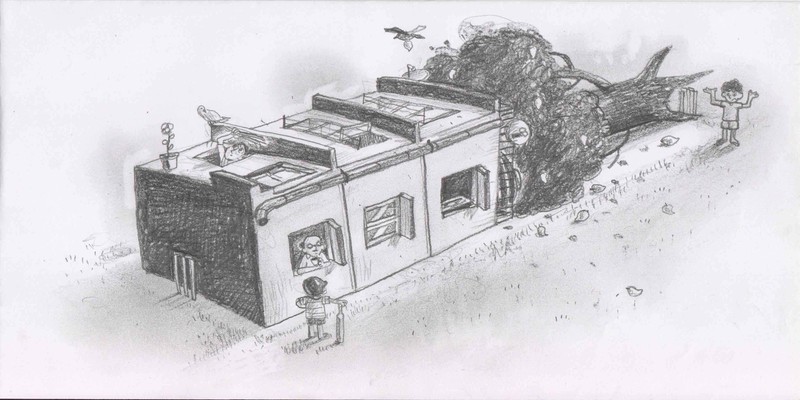
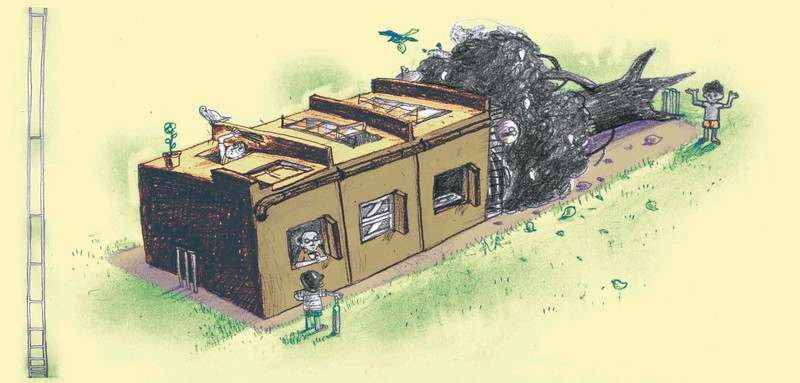
I drew out the scene in more detail in pencil - adding more characters and textures - making it believable.Dish antennas, annoying pigeons and a kaamwali bai shooing them away, an ignorant uncle and two boys who's game had just been ruined by this lesson. Adding my own tinier stories into the bigger one is always fun.
Step 3/Colour
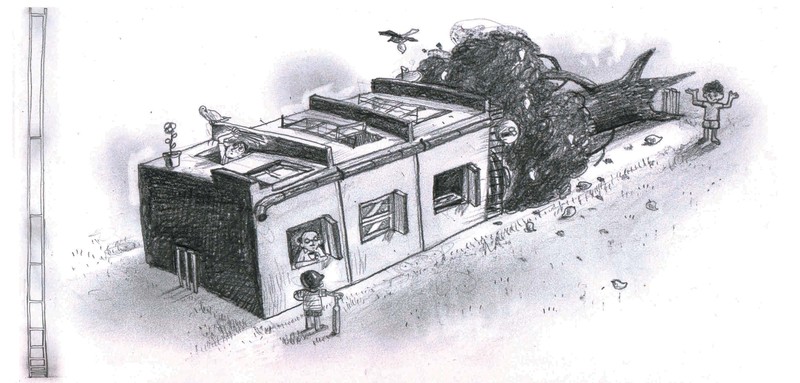
I scanned the image into photoshop and cleaned it up a bit first - I also added the ladder from another image into this one.
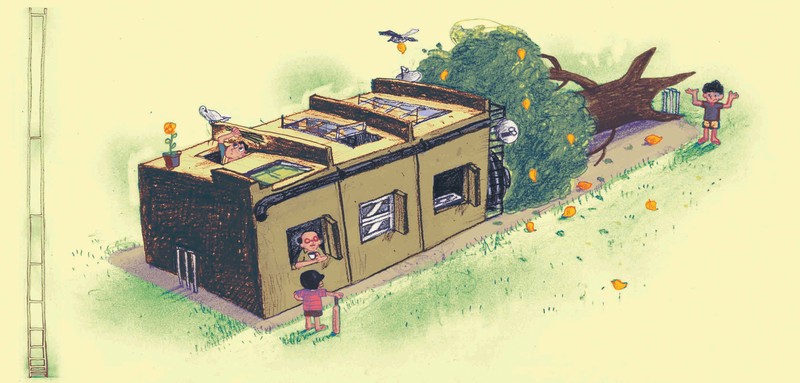
Then I masked out parts like 'ground','tree' 'mangoes' etc in different layers and coloured them in one by one using a gradient map.
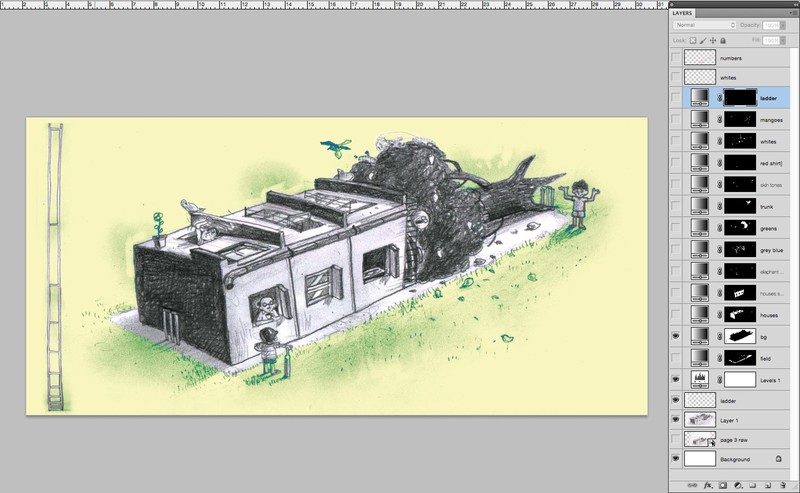
Patient work... but slowly, layer by layer I saw the final image unravel.
Step4 / Lines and numbers
And finally I added lines and numbers to the artwork to complete it.
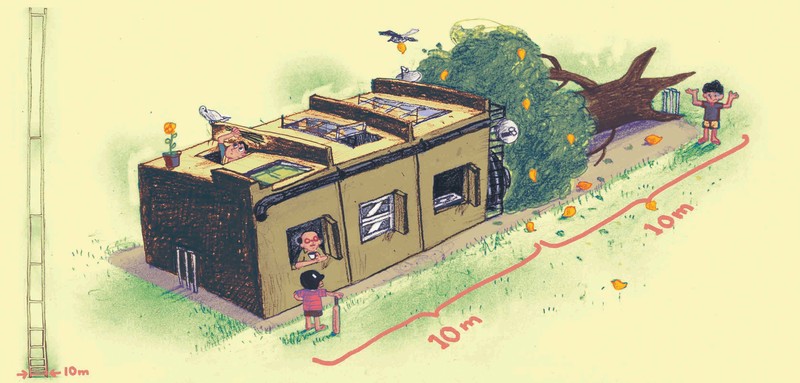
Voila!
comments (2)StoryWeaver Spotlight: K. Suresh
Posted by Remya Padmadas on June 25, 2019K. Suresh likes to be known as a translator and has several books published for adults as well as children. He is one of the founders of Manchi Pustakam, a Trust for publishing and distributing children's books in Telugu. The organisation has more than 200 titles published by it and distributes an equal number of select books by other publishers. His emphasis is on books that create interest in and love for books among children. He feels that there is a great need for graded books that help children to increase their reading capacities. He has translated many stories to Telugu for Pratham Books including 'The Cat in the Ghat!' and 'What If?'. You can read his stories Mouse in the House and Lost and Found on StoryWeaver.
Q: What type of person do you think makes the best translator for children’s stories?
A person who loves books, likes children and respects them.
Q: Do you have any advice for anyone interested in becoming a translator?
A: The person should have good command over both the languages and should know the nuances. S/he should also know the cultural context and usage of idioms and phrases in both the languages. One should also read a lot.
The language for children should be simple. While translating one should use available vocabulary, though English words are commonly used. After completing the translation, give some gap and read it again without the source language text. Read it objectively, as if it was done by others and your job is to find errors in it.
Q: A book you'd like to recommend to other translators?
I suggest that the translators start with what they like and should feel that the children in the other language would miss a lot if that book isn’t translated. Obviously, I would suggest a book that I love very much.
Q: What is your personal relationship to language and/or translation?
I love to read books. I have started my work as a sub-editor in a Telugu newspaper, which involved translation and cultivated it over the years. I am not a creative writer, so I take pride in translation!
Q: When you’ve been given a story to translate, what’s your process, and how long does it generally take?
Sometimes I jump into translation. Sometimes, I read the entire story and sleep over it. While reading and in the free time, I think about the appropriate words and how it will be in Telugu.
Q: What do stories in translation bring to young readers?
It opens up their world! It introduces a new culture.
Q: You’ve translated stories for us. Which has been your favourite to work on?
I had the fortune of translating, reviewing and being a Guest Editor for Pratham Books. I liked translating The Cat in the Ghat!
Q: What is the hardest thing about translating from English into Telugu? How do you navigate words or phrases that are tricky to translate?
The structure of English sentence is complex; it can take several adjectives and be very long. Breaking the sentences while translating sometimes results in losing the emphasis. The rhyming and punning with English words is difficult to translate. After the first translation, I explore simpler expressions and choice of vocabulary.
Q: How do you feel when your story reaches the child?
When we get to know that a child has enjoyed a story/ book we are very happy.
Q: Translating stories must have required research when it came to STEM related terms and concepts. How did you explore new objects and concepts?
For some words, I look up the dictionary. Sometimes re-writing helps. Constant reading will add to one’s vocabulary.
Q: How else do you think we can join hands to take more stories to more children in more languages?
Pratham Books and Tulika are doing excellent job in multi-language publications. StoryWeaver is providing a platform for exchange of books in various languages. Arvind Gupta is encouraging multi-language translations of children’s books and posting them on internet archive. Earlier there was considerable direct translation in regional languages, now English has become the connecting language. A publishers’ consortium for exchange of rights would be beneficial.
Q: As a publisher and translator what do you think is the best way to approach a child?
The general tendency is to preach to children, which I do not subscribe to. We expect lot from children without practising/ following them. The best way is to make a range of books available to children from which they can choose. We should not be overly worried about what they learn from a book. They will definitely learn from books and the society at large.
Be the first to comment.
#EnvironmentMonth: Every Tree Counts!
Posted by Remya Padmadas on June 25, 2018It's the last week of our #EnvironmentMonth celebrations, and we're doffing our hat to the lungs of the planet: trees. Beautiful, nurturing and providing comfort to those who seek it, trees are the lifeline of the planet. Here are some beautiful books that celebrate trees in all their glory and also include stories of people who go out of their way to save trees. Free to read, download and share, and available in multiple languages.
Up World, Down World by Padmaparna Ghosh and Sunaina Coelho.
In a canopy forest in India, the Up World and Down World have always been suspicious of each other. But it all changes when Gopa the dormouse drops her book by accident on Fatima’s head. A story about the biodiversity of the canopy forests and friendship.
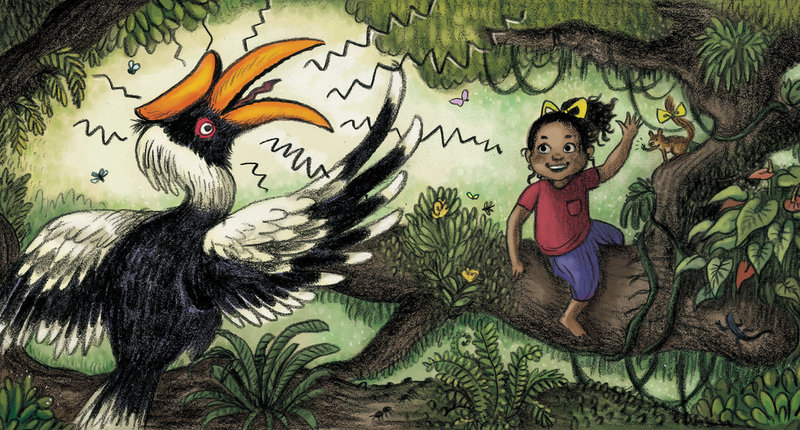
Every Tree Counts by Praba Ram and Sheela Preuitt illustrated by Sangeetha Kadur
From the stately Deodar and colourful Coral to the majestic Banyan and common Pipal, the book takes children on a journey across varied landscapes as they count trees, and picture the uses of each tree. Look around you to find more trees, and learn what these terrific trees can do.
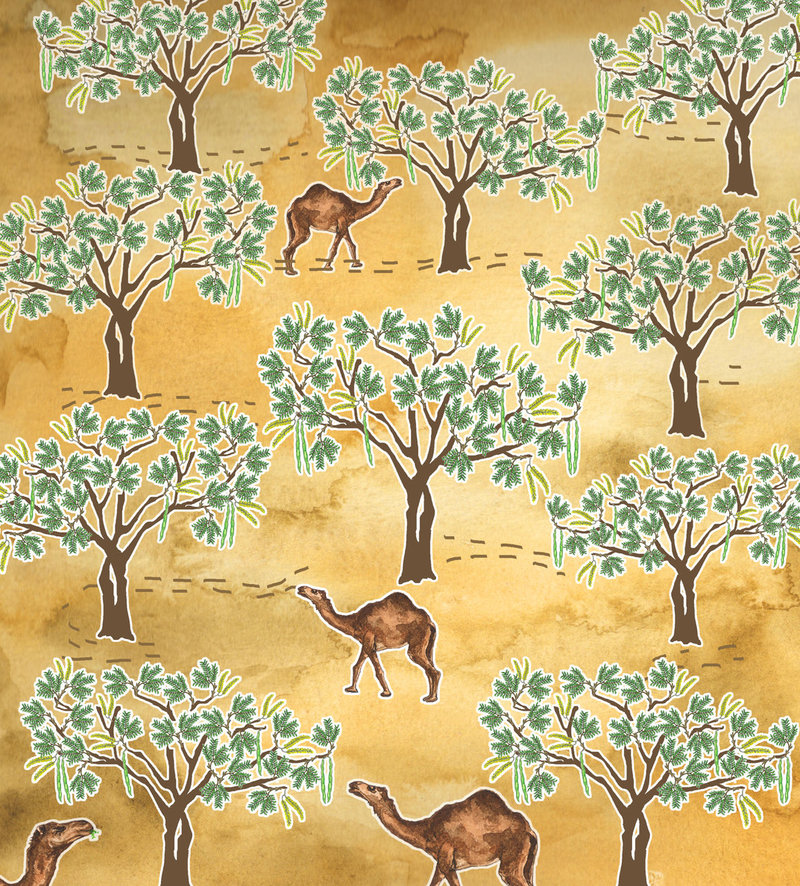
My Tree-Friend by Shreekumar Varma and Rae Zachariah
We all know trees are our friends. But can friends be trees too? Just like the fruits in Ammoomma’s trees, friends can be sweet, sour, or both!
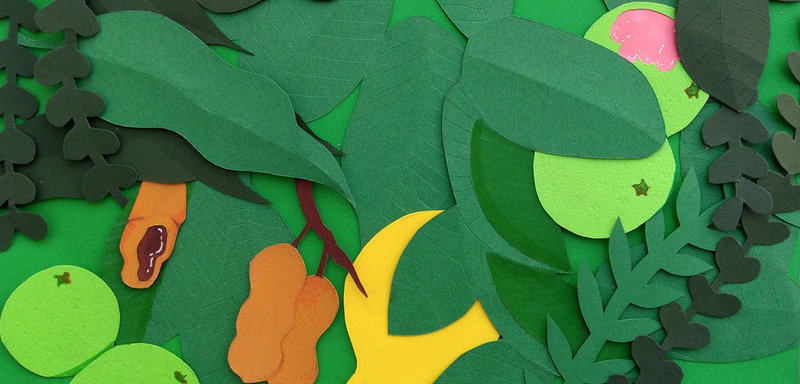
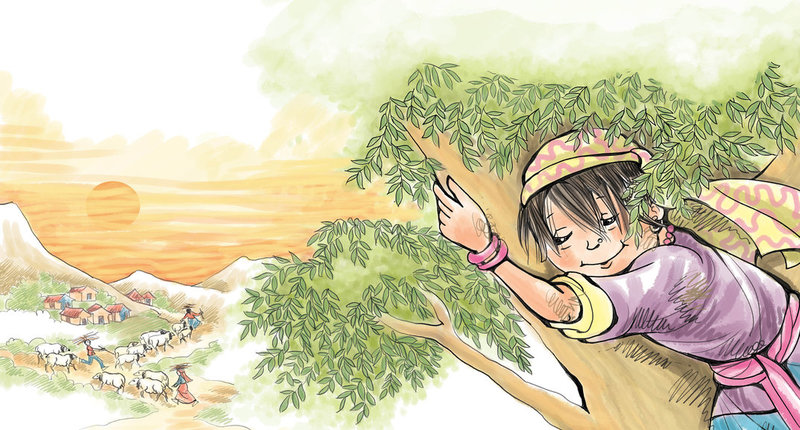
Chipko Takes Root by Jeyanthi Manokaran
Here is a story set in the hills that shows what bravery and grit can accomplish. Dichi, a brave Bhotiya girl takes part in the Chipko movement to save her beloved trees. Everybody in her village knows that trees give them all the important things in their life. Rapid deforestation in the Himalayan region of Alaknanda river caused floods in the 1970s and gave birth to a movement to save trees by hugging them. Read this heartwarming tale to learn the power of collective action as seen through the eyes of young Dichi.
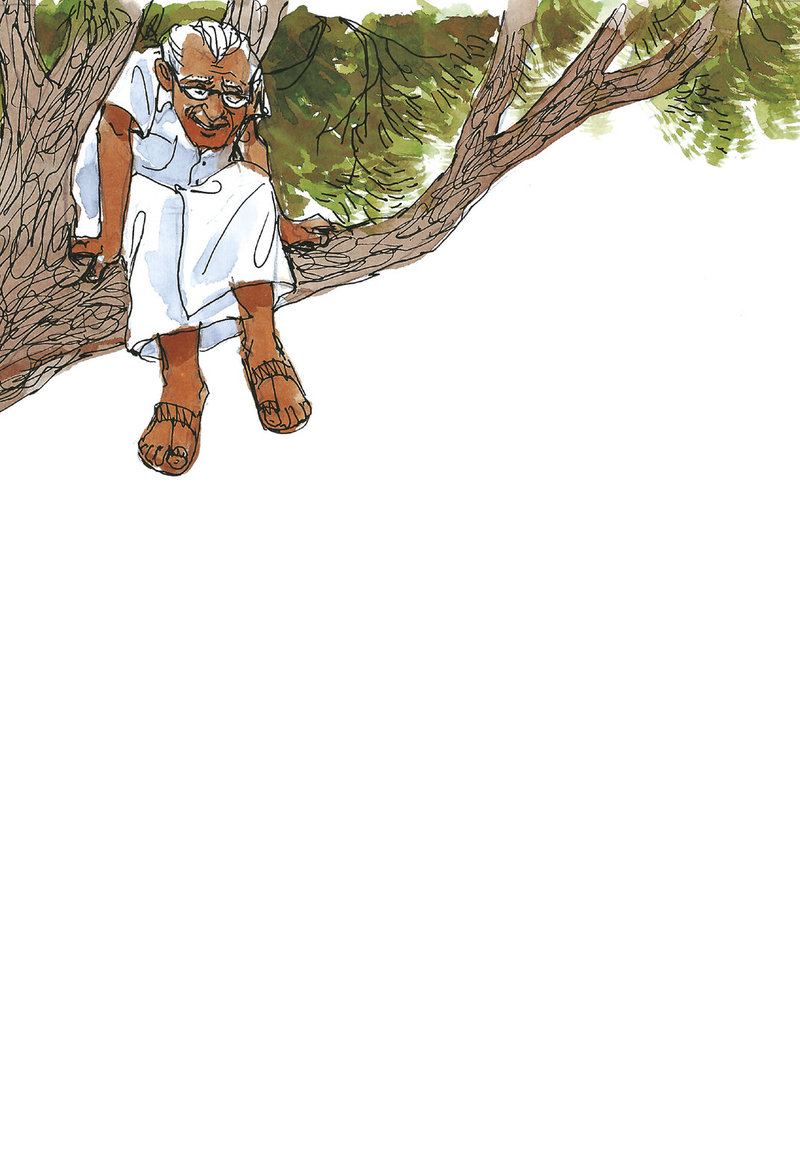
Grandfather Goes on Strike by K.S. Nagarajan and Neeta Gangopadhya
Most grandfathers are content to lie back in an armchair and lazily read the day's newspaper. Not our tree loving senior citizen. He goes on strike for his beloved trees and a series of hilarious events liven up this entertaining tale. Read on to find out who saves the day and who saves the trees!
 A Walk Among Trees by Nimret Handa
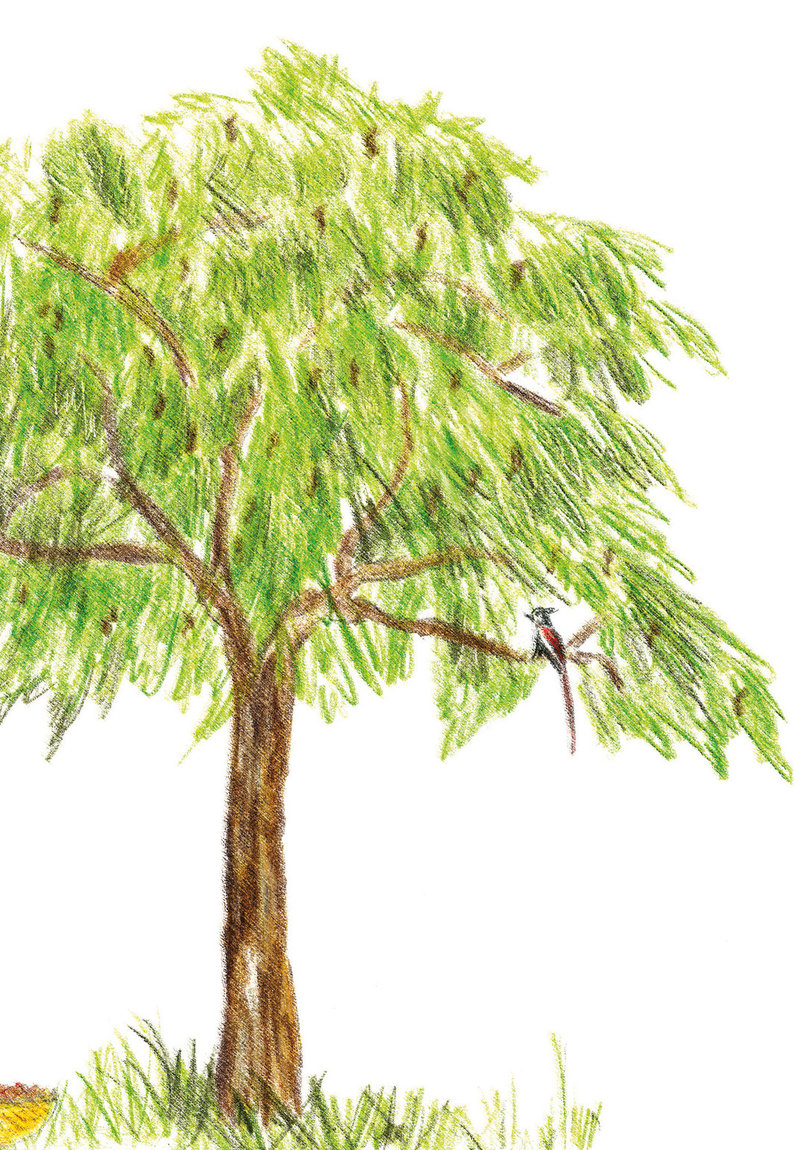
Trees have been growing on our planet well before human beings appeared on it. Without their comforting shade and tasty fruit, our earth would be quite a barren place. Take a walk among trees in the King's orchard to savour the taste, the smell and the legends associated with bountiful fruit trees in India. You will feel refreshed by all that you learn!
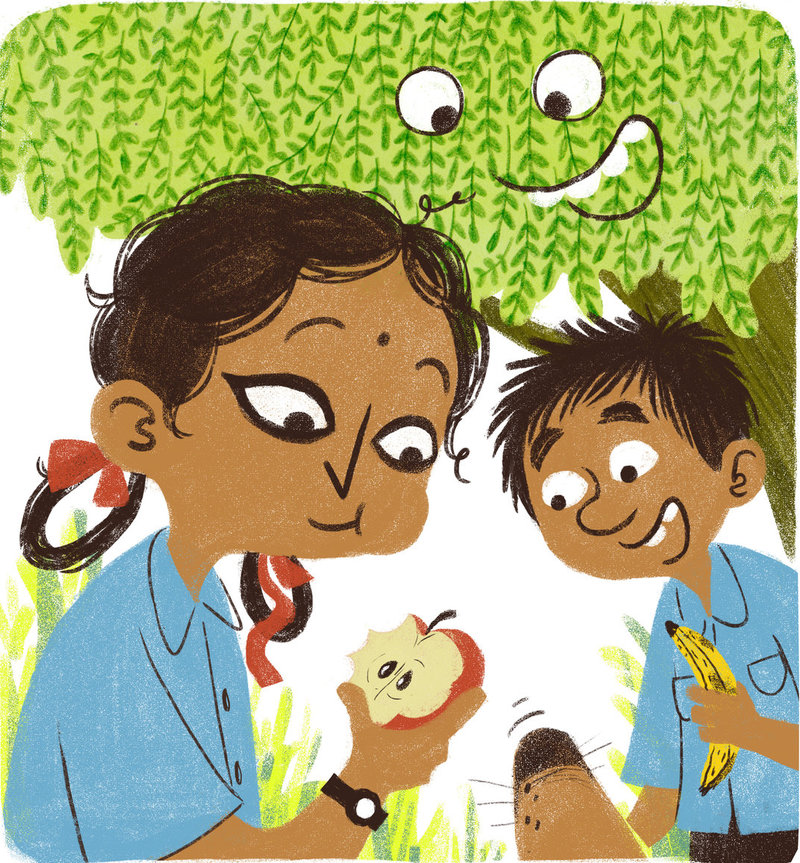
Let's Go Seed Collecting! by Neha Sumitran and Archana Sreenivasan
Join Tooka, Poi, and their best friend Inji the dog, as they go around collecting seeds. The adventure begins when the three friends meet Pacha the tamarind tree.

We've hope you've enjoyed our month long sharing of environment themed books! Do come back for more stories in more languages!
Be the first to comment.