Ready to take off? Fun activities for aeroplane buffs!
Posted by Remya Padmadas on March 05, 2016How do Aeroplanes Fly? by Aditi Sarawagi and Lavanya Karthik is a book that will give a child's imagination wings!
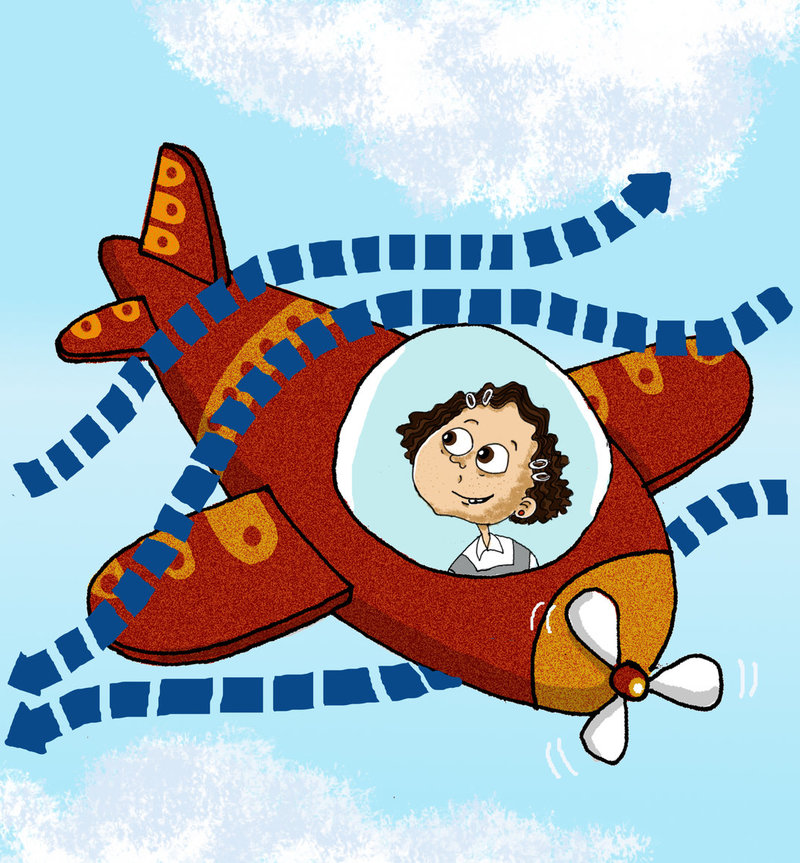
Sarla wished she could fly high like an eagle or like an aeroplane. Of course you can fly, said her new teacher. Sarla shares all that she has learnt about flight and aeroplanes in this delightful book.
ACTIVITIES
Cargo Planes
(Source: http://kidsactivitiesblog.com/77853/stem-paper-airplane-challenge)
Resources
-
Construction Paper
-
Cellotape
-
A handful of coins of different sizes and weight
-
A doorway
-
Whistle
What to do
-
Ask each child to create a paper aeroplane using the YouTube tutorial shared here:
-
Once their plane is ready ask them to stick coins of different size and weigh to it using tape (this is why you need to use construction paper and not regular A4 paper)
-
Decide upon a start line and mark it with masking tape or even a long rope. Make sure it’s opposite a doorway!
-
Ask the children to line up together at the ‘starting line’.
-
When you blow the whistle they all launch their planes.
-
The plane that glides the farthest wins!
Straw Rockets
(Source: http://lifeasmama.com/10-rainy-day-activities-your-kids-will-love/6/)
Resources
-
Drinking straws
-
Paper
-
Glue or cellotape
-
Scissors
-
Crayons or markers.
What to do
-
Cut down pieces of paper and decorate to your desire.
-
Then lightly fold around the end of a straw and tape the paper together (not to the straw) like a cap
-
Then just blow! Kids can see how far each can blow their rockets or come up with their own games.
Target Practice
(Source: http://lifeasmama.com/10-rainy-day-activities-your-kids-will-love/7/)
This is a variation of activity 1, but a little more tricky!
Resources
-
Paper
-
Large sheet of thick board paper.
-
A doorway
-
Whistle
-
Scissors
-
Masking tape.
What to do
-
Ask each child to create a paper aeroplane using the YouTube tutorial shared here: https://youtu.be/qhuRw88A-8c
-
Cut out different sized holes on the board paper and hang it over an open door using masking tape
-
Ask children to line up at a pre-determined ‘starting point’ with their paper aeroplanes.
-
Blow the whistle. Kids must try and get their planes through the holes on the board sheet!
If you have some fun activities based on 'How Do Aeroplanes Fly' share them with us in the comments section below or on Twitter or Facebook.
Be the first to comment.Meet Team4Tech
Posted by Remya Padmadas on March 30, 2017The idea for Team4Tech was born in 2012, when Julie Clugage and Lila Ibrahim, witnessed the “transformative power of education”: Julie worked in a school in rural Guatemala while Lila worked in an orphanage in Lebanon. After working closely for years at Intel Corporation, to advance education and economic development through technology, they launched the Intel Education Service Corps in 2009. This program was met with incredible support as a large number of Intel employees began volunteering their time and expertise to the improvement of education.
In September 2012, they had another idea: creating a platform accessible to talented professionals from a variety of technological companies, to improve the quality of education around the world. With this in mind, in May 2013, they launched their first project in Kenya with a total of nine volunteers. The plan was to introduce an adaptive learning software solution to increase the education level of the primary school children. Within six months of this implementation, the students had doubled their literacy test scores. Since this project, Team4Tech has engaged in many similar projects, broadening their impact on education standards. One such project was run in November, 2016, in Hardoi, Uttar Pradesh by Dawn Kwan, the project manager for Team4Tech.

VMware and Udaan Mewat Teachers
She led a project with CARE India's Udaan Mewat school where a team of VMware employees brought technology to augment the teaching and learning objectives for a residential bridge-building school for girls, who had previously dropped out of school. Udaan Mewat is an innovative 11-month program where a group of 80 girls complete Grades 1 - 5 through innovative teaching methods, and continue their studies in government schools. After 5 weeks of preparation, the VMware volunteers spent a week in Mewat, showing the teachers how to use the technology provided - building long term sustainability of the equipment.
One of the tools used in this program was Pratham Books' StoryWeaver. Dawn taught three of CARE India’s master trainers, who work with government lower and upper primary school teachers (giving them a reach of over 1000 teachers and 50,000 students), how to use StoryWeaver. She reported that they “loved StoryWeaver's wealth of stories, the ability to translate and the ease of creating new stories.”

CARE India trainers learning about StoryWeaver
She also shared Varseena's story with us. A student in the first batch who had graduated from Udaan Mewat, Varseena learned how to use StoryWeaver. “She's extremely bright and created a story, and taught her story to the rest of the Udaan students”. Varseena will play a continuous role in the implementation of StoryWeaver since she was asked to teach the teachers how to use the platform. On the last day, one of the teachers even used a downloaded Pratham Books story in her class.
Team4Tech has clearly made a lot of progress in bettering the education system all over the world through their programs and outreach. The existence of platforms like StoryWeaver and KA Lite (an offline version of Khan Academy - also used by Team4Tech) makes this job easier and more fun for the students. The technological aspect of this is what excites people the most and, in a world where electronic devices have taken over lives, introducing education via technology engages the audience more than anything else. This is why, although few in number, organisations like Team4Tech are successful in completing their goals.
Be the first to comment.Drawing Manu
Posted by Remya Padmadas on January 18, 2018"'Scratch! Scratch! Scratch' is such a charming story written by Dawa Lahmu Yolmo. Here, the protagonist Manu, is a naughty little girl who loves playing hopscotch! She's always counting 1-10 when she plays which is great way to introduce counting to little kids.
When I first got the manuscripy I was very curious about what a story with a title like 'Scratch! Scratch! Scratch!' could be about. When I read the story, I immediately fell in love with the Manu. I always enjoy creating rebellious girl characters who are bold, naughty, brave, clever and full of life. The story is based in he beautiful misty hills of Sikkim with colourful houses connected by twisty, curvy, sloping roads. My favourite part of the book was drawing the beautiful greenery of Sikkim.
To be able to create Manu’s character I had to do some research on Sikkim, the people and especially school going kids. I searched for reference images on the internet for village life in Sikkim. Maithili Doshi, who Art Directed the book shared images of the actual school where the writer, a teacher,teaches. Based on these references I came up with a few rough sketches of Manu and other family members. Though there is no mention in the story, I added a baby sibling. Timely feedback from Maithili and Bijal helped with the finishing touches. For the final drawings I used charcoal pencil for outline and watercolour washes.
I have tried to incorporate the lifestyle and culture of the region while keeping the visuals as simple as possible.
I could easily relate to Manu’s character as I was a bold, naughty and rebellious child myself. I used to love playing 'Ghar, Ghar' or House as a kid. And the best part of the game was that you could play it alone!
Now that the book has been published on StoryWeaver I am keen to know how children respond to the visual identity of Manu created by me!"
Be the first to comment.